Starting and operating a computer repair business requires more than just technical skills. Whether you're planning to launch a new venture or looking to scale an existing operation, understanding the business fundamentals is crucial for long-term success. The IT services landscape in 2026 presents both opportunities and challenges, from evolving technology needs to increasingly sophisticated customer expectations. This comprehensive guide explores the essential elements of building a profitable computer repair business, from initial setup through growth strategies that position your company for sustained success.
Understanding the Computer Repair Business Landscape
The computer repair industry continues to evolve rapidly as technology becomes more integral to daily operations for businesses and individuals alike. In 2026, the market for computer repair services remains robust, driven by the constant need for hardware maintenance, software troubleshooting, and network support.
Market Opportunities and Challenges
Today's computer repair business faces a unique set of circumstances. While devices become more complex and specialized, creating demand for expert services, competition has intensified. Small businesses particularly need reliable IT support but often cannot justify hiring full-time technical staff.
Key market trends include:
- Increased demand for remote support services
- Growing cybersecurity concerns requiring specialized expertise
- Rising expectations for fast response times
- Shift toward preventative maintenance rather than reactive repairs
The most successful computer repair operations recognize these trends and adapt their service offerings accordingly. Building relationships with business clients often proves more profitable than focusing solely on consumer repairs, as commercial customers require ongoing support and value long-term partnerships.
Essential Steps to Launch Your Computer Repair Business
Establishing a solid foundation is critical when starting your venture. The initial steps to start a computer repair business involve careful planning across multiple dimensions, from legal structure to technical capabilities.
Business Structure and Legal Requirements
Choosing the right business structure affects everything from taxes to liability protection. Most computer repair businesses operate as sole proprietorships, LLCs, or corporations. Each structure offers different advantages depending on your growth plans and risk tolerance.
Critical legal and administrative considerations:
- Business registration and licensing in your jurisdiction
- Professional liability insurance to protect against claims
- General liability coverage for physical business locations
- Tax identification numbers and accounting systems
- Compliance with local business regulations
Understanding startup costs for an IT repair business helps you budget appropriately. Initial expenses typically include business registration fees, insurance premiums, diagnostic tools, marketing materials, and working capital to sustain operations during the initial growth phase.
Required Skills and Certifications
Technical competency forms the backbone of any computer repair business, but not all technicians need the same certifications. Assess your target market to determine which credentials matter most to your potential clients.
| Certification Type | Relevance | Typical Clients |
|---|---|---|
| CompTIA A+ | Essential for general repair | Consumers, small businesses |
| Network+ | Networking and connectivity | Business clients, offices |
| Security+ | Cybersecurity fundamentals | Security-conscious businesses |
| Microsoft Certified | Windows environment support | Corporate environments |
| Apple Certified | Mac and iOS devices | Creative professionals, enterprises |
Continuous learning is non-negotiable in this field. Technology evolves rapidly, and maintaining current knowledge distinguishes professional services from amateur offerings.
Developing Your Service Portfolio
Defining your service offerings strategically positions your computer repair business in the market. Rather than trying to be everything to everyone, focus on services that align with your expertise and target customer needs.
Core Service Categories
Most successful computer repair businesses build their portfolios around several fundamental service categories. Each category can be priced differently based on complexity and value delivered.
Common service offerings include:
- Hardware diagnostics and repair
- Software installation and troubleshooting
- Virus and malware removal
- Data recovery and backup solutions
- Network setup and configuration
- Preventative maintenance packages
For businesses seeking more comprehensive support, transitioning select clients toward managed IT services can create recurring revenue streams while delivering greater value. This proactive approach helps clients avoid costly downtime and positions your business as a strategic partner rather than a transactional service provider.
Specialized Services and Niche Focus
Identifying a niche can differentiate your computer repair business from competitors. Specialization allows you to develop deep expertise, command premium pricing, and build a reputation as the go-to provider for specific needs.
Consider these potential specialization areas:
- Business IT support: Focus exclusively on commercial clients
- Mac repair: Serve the Apple ecosystem exclusively
- Gaming systems: Custom builds and gaming hardware
- Data recovery: Specialized equipment and expertise
- Network infrastructure: Enterprise-level networking
Pricing Strategies That Drive Profitability
Pricing your services appropriately is one of the most challenging aspects of running a computer repair business. Set rates too high, and you may struggle to attract clients; too low, and you'll undervalue your expertise while limiting growth potential.
Pricing Models to Consider
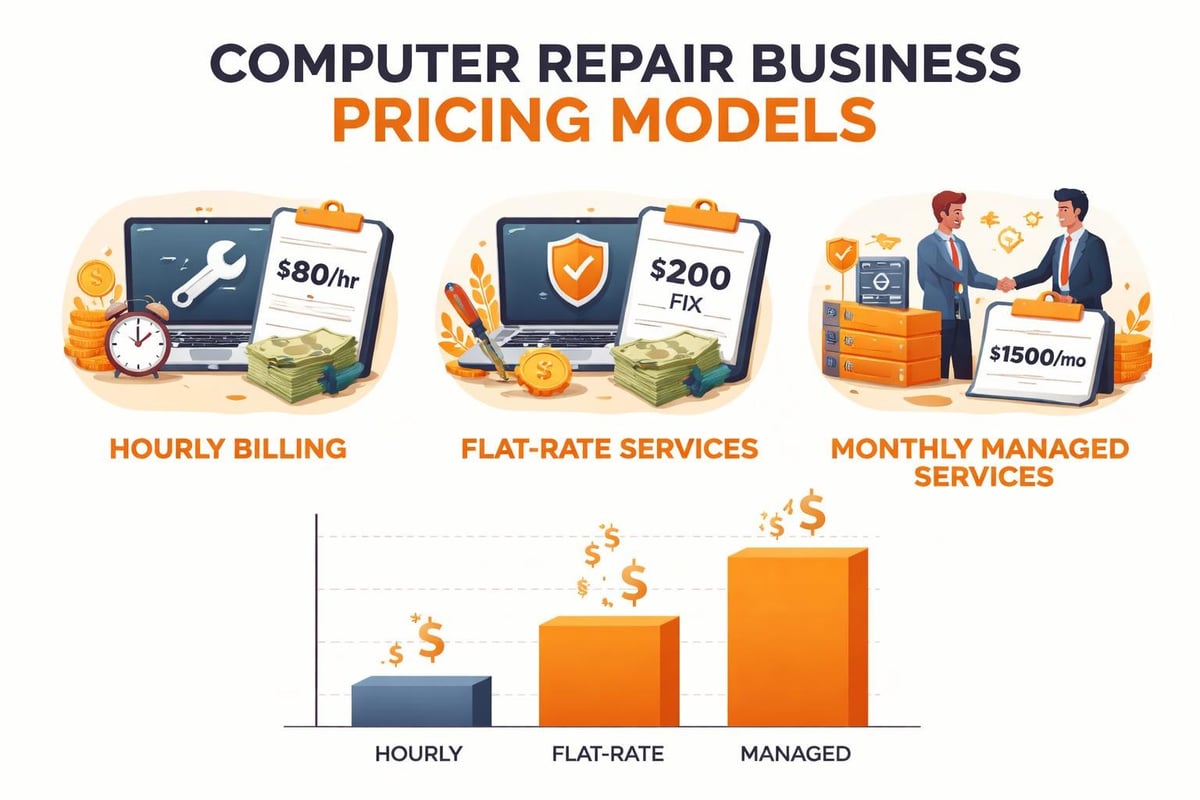
Different pricing structures work for different service types and client relationships. Many successful businesses use a combination of models depending on the situation.
| Pricing Model | Best For | Advantages | Considerations |
|---|---|---|---|
| Hourly rates | One-time repairs | Simple, flexible | Can discourage efficiency |
| Flat-rate pricing | Standard services | Predictable for clients | Requires accurate time estimates |
| Monthly retainers | Ongoing support | Recurring revenue | Need clear scope definition |
| Project-based | Complex installations | Matches client budgets | Requires detailed scoping |
Setting competitive pricing for computer repair services requires researching local market rates while considering your unique value proposition. Don't compete solely on price; instead, emphasize quality, reliability, and customer service.
Strategies to Boost Profit Margins
Profitability depends on more than just pricing. Enhancing profit margins in computer repair businesses involves optimizing operations, reducing waste, and maximizing the value delivered per customer interaction.
Margin improvement tactics:
- Bundle services to increase average transaction value
- Reduce diagnostic time through systematic processes
- Negotiate favorable terms with parts suppliers
- Minimize repeat visits through thorough initial repairs
- Implement efficient scheduling to maximize billable hours
Marketing Your Computer Repair Business
Even the most skilled technicians need customers. Effective marketing attracts the right clients and communicates your unique value proposition clearly.
Digital Marketing Fundamentals
In 2026, your online presence is often the first impression potential clients receive. A professional website serves as your digital storefront, establishing credibility and making it easy for customers to learn about your services.
Essential digital marketing components:
- Professional website with clear service descriptions
- Google Business Profile for local search visibility
- Customer review management across multiple platforms
- Social media presence on relevant platforms
- Email marketing for customer retention
Advanced growth strategies for repair services often emphasize digital channels due to their measurability and scalability. Track which marketing efforts generate leads and adjust your strategy based on performance data.
Local Marketing and Community Engagement
For a computer repair business serving a specific geographic area, local marketing tactics often deliver excellent returns on investment. Building recognition within your community creates referral opportunities and establishes trust.
Consider these local marketing approaches:
- Partner with complementary businesses for cross-referrals
- Sponsor local events or community organizations
- Offer workshops on technology topics at libraries or community centers
- Develop relationships with office managers and business owners
- Create loyalty programs that encourage repeat business
Customer education and engagement activities such as workshops on basic maintenance or cybersecurity best practices position you as a trusted advisor while demonstrating your expertise to potential clients.
Operational Excellence and Customer Service
Technical competency gets clients in the door, but operational excellence keeps them coming back. Your computer repair business succeeds or fails based on the entire customer experience, not just the quality of repairs.
Creating Efficient Workflows
Systematizing your operations improves consistency, reduces errors, and allows you to serve more clients without sacrificing quality. Document standard procedures for common tasks to ensure every customer receives the same high-quality experience.
Workflow optimization areas:
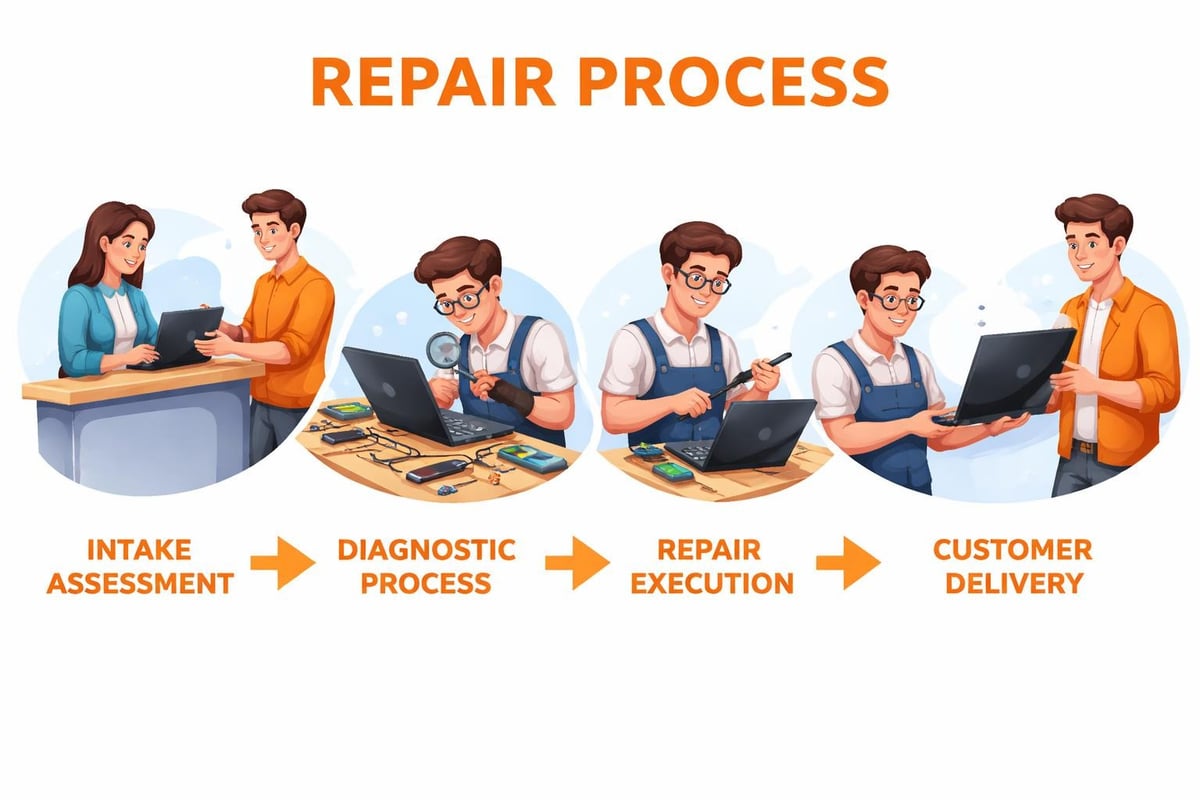
- Intake and diagnostic procedures
- Parts ordering and inventory management
- Repair documentation and tracking
- Quality assurance testing before return
- Customer communication protocols
Consider investing in repair shop management software that handles scheduling, invoicing, customer records, and inventory tracking. These tools eliminate manual processes and provide valuable business insights.
Delivering Exceptional Customer Experiences
Outstanding customer service differentiates your computer repair business from competitors who focus solely on technical work. Many clients choose providers based on trust and communication as much as technical capability.
Focus on these customer service principles:
- Clear communication: Explain issues and solutions in understandable terms
- Realistic timelines: Set accurate expectations and meet deadlines
- Transparent pricing: Provide detailed estimates before beginning work
- Follow-up: Contact customers after service to ensure satisfaction
- Responsive support: Return calls and emails promptly
Building customer loyalty in computer repair creates a stable business foundation. Loyal customers provide recurring revenue, refer new clients, and offer valuable feedback for continuous improvement.
Financial Management and Growth Planning
Running a profitable computer repair business requires financial discipline and strategic planning. Understanding your numbers allows you to make informed decisions about pricing, hiring, and expansion.
Key Financial Metrics to Monitor
Track these essential metrics monthly to maintain financial health and identify growth opportunities:
| Metric | Why It Matters | Target Range |
|---|---|---|
| Average ticket value | Revenue per customer interaction | Increasing trend |
| Customer acquisition cost | Marketing efficiency | Lower than lifetime value |
| Gross profit margin | Service profitability | 50-70% for services |
| Operating expenses ratio | Cost control | Below 40% of revenue |
| Cash flow | Financial stability | Positive and growing |
Controlling costs when planning your computer repair business involves balancing necessary investments with financial prudence. Avoid over-investing in equipment or space during early stages; scale infrastructure as revenue grows.
Planning for Sustainable Growth
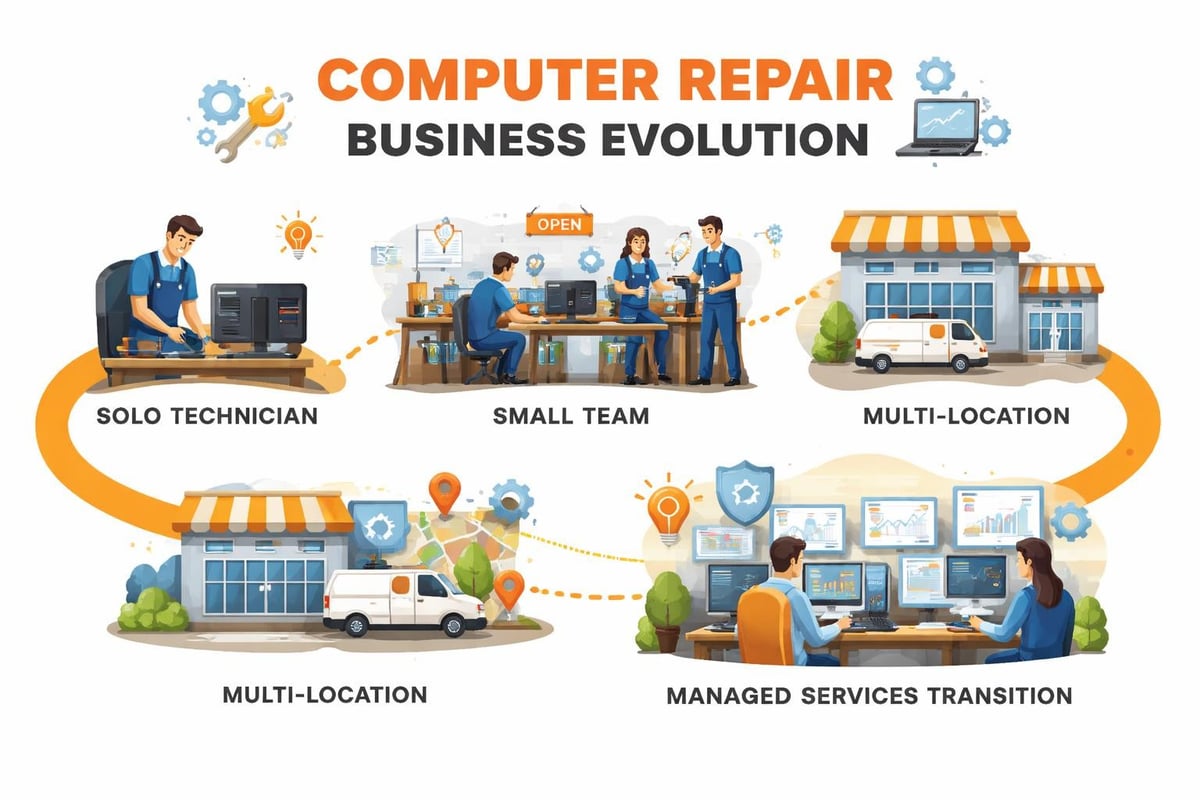
Growth for a computer repair business can take many forms. Some owners prefer remaining small and specialized, while others pursue aggressive expansion. Define what success looks like for your specific goals.
Growth pathways to consider:
- Adding technicians to increase service capacity
- Opening additional locations in new markets
- Expanding service offerings to meet broader client needs
- Developing corporate accounts and enterprise clients
- Transitioning toward managed services models
Remember that sustainable growth requires systems and processes that don't depend entirely on the owner. Document procedures, train team members thoroughly, and build a business that can operate effectively even when you're not directly involved in every repair.
Building Strategic Partnerships
No computer repair business operates in isolation. Strategic partnerships extend your capabilities, enhance credibility, and create referral opportunities that drive growth.
Vendor Relationships
Establishing relationships with equipment manufacturers and parts suppliers provides multiple benefits. Authorized service provider status with major brands enhances credibility while providing access to technical resources, training, and sometimes preferential pricing.
Partnership opportunities include:
- Hardware manufacturers for warranty repairs
- Software vendors for licensing and support
- Parts distributors for favorable pricing
- Professional service providers like remote support specialists
- Business consultants who serve your target market
Referral Networks
Build a network of complementary businesses that serve similar clients but don't compete directly. These relationships create mutual referral opportunities that benefit all parties.
Potential referral partners include office equipment suppliers, telecommunications providers, business consultants, and marketing agencies. When you can't solve a client's problem, referring them to a trusted partner maintains the relationship while helping the customer.
Building a successful computer repair business in 2026 demands technical expertise, business acumen, and unwavering commitment to customer service. By implementing systematic operations, strategic pricing, and effective marketing, you position your business for sustainable growth and profitability. Whether you're serving consumers or businesses, focusing on delivering exceptional value and building lasting relationships creates the foundation for long-term success. Starcomm Technologies understands the challenges facing businesses managing their technology infrastructure, offering comprehensive IT support that goes beyond break-fix services to provide proactive, reliable solutions that keep your operations running smoothly.