Searching for "it solutions near me" reflects a critical business decision: finding technology partners who can respond quickly, understand local market conditions, and provide hands-on support when systems fail. Geographic proximity matters more than many business owners realize, especially when network outages, security breaches, or hardware failures demand immediate attention. The right local IT provider combines technical expertise with rapid response capabilities, transforming technology from a constant headache into a strategic business advantage.
Why Location Matters for IT Support Services
Physical proximity to your IT provider creates tangible advantages that remote-only support simply cannot match. When critical systems go down, having technicians who can arrive on-site within an hour rather than scheduling visits days in advance minimizes costly downtime.
Local IT providers develop deep familiarity with regional infrastructure, internet service provider quirks, and common technical challenges specific to your area. This knowledge accelerates troubleshooting and problem resolution.
Building Relationships Through Regular Contact
Face-to-face interactions foster stronger partnerships than phone calls and emails alone. Local providers invest time understanding your business operations, growth plans, and unique technical requirements through regular on-site visits.
Key relationship benefits include:
- Direct access to senior technicians and decision-makers
- Better communication during complex projects or emergencies
- Personalized service that adapts to your company culture
- Easier coordination for infrastructure upgrades and expansions
Trust develops naturally when you can meet your IT team in person, tour their facilities, and establish genuine working relationships built on consistent performance.
Essential Services to Expect from Local IT Providers
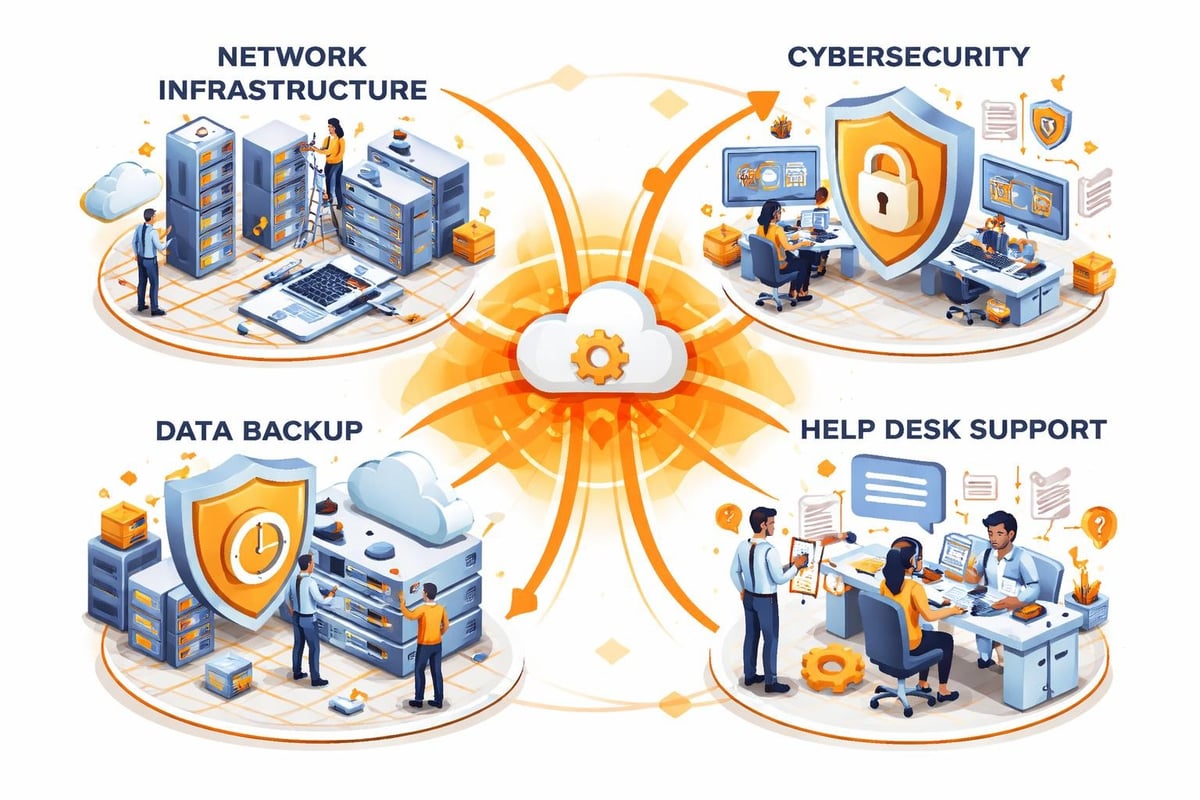
Professional IT solutions near me should encompass comprehensive technology management rather than reactive break-fix services. Modern businesses require proactive monitoring, strategic planning, and multi-layered security protection.
| Service Category | Core Functions | Business Impact |
|---|---|---|
| Network Management | Monitoring, optimization, troubleshooting | Ensures reliable connectivity and performance |
| Security Protection | Firewalls, antivirus, threat detection | Prevents data breaches and ransomware |
| Data Backup | Automated backups, disaster recovery | Protects against data loss and enables quick restoration |
| Help Desk Support | User assistance, ticket management | Maintains employee productivity |
Proactive Monitoring and Maintenance
The most valuable IT providers monitor your systems continuously, identifying potential failures before they disrupt business operations. This proactive approach to IT management catches problems during their early stages when solutions remain simple and inexpensive.
Automated alerts notify technicians when servers run hot, storage capacity reaches critical levels, or unusual network activity suggests security threats. Regular maintenance schedules ensure software updates, security patches, and system optimizations happen consistently.
Many Toronto businesses benefit from managed IT services that combine monitoring, maintenance, and strategic planning into predictable monthly fees, eliminating surprise repair bills and technology emergencies.
Evaluating IT Providers in Your Area
Not all local IT companies deliver equivalent value or expertise. Careful evaluation prevents costly mistakes and ensures you partner with providers capable of supporting your current needs and future growth.
Technical Certifications and Expertise
Verify that potential providers maintain current certifications from major technology vendors. Microsoft, Cisco, VMware, and other industry leaders require extensive training and examination before granting partner status.
- Request certification documentation for key team members
- Ask about continuing education programs that keep skills current
- Inquire about specialized expertise in your industry vertical
- Verify insurance coverage for professional liability and cyber incidents
- Check references from businesses similar to yours
Technical competence separates amateur operations from professional firms capable of handling complex enterprise environments.
Response Time Commitments
Service level agreements (SLA) establish clear expectations for response and resolution times. Quality providers guarantee specific response windows based on issue severity.
Critical emergencies might warrant 15-minute response times with on-site arrival within two hours, while minor issues receive next-business-day attention. Written SLAs protect both parties by documenting responsibilities and performance standards.
Understanding best practices for IT infrastructure helps you evaluate whether providers recommend appropriate solutions for your business size and complexity.
Cost Structures and Service Models
IT solutions near me typically offer several pricing models, each with distinct advantages depending on your business needs and budget predictability preferences.
Comparing Pricing Approaches
Break-Fix Model:
- Pay only when problems occur
- Unpredictable monthly expenses
- No proactive prevention
- Higher total cost over time
Managed Services:
- Fixed monthly fee covers most services
- Predictable budgeting
- Proactive monitoring and maintenance
- Typically lower total cost of ownership
Hybrid Approach:
- Base monthly fee for core services
- Additional charges for projects and upgrades
- Balance between predictability and flexibility
- Common for growing businesses
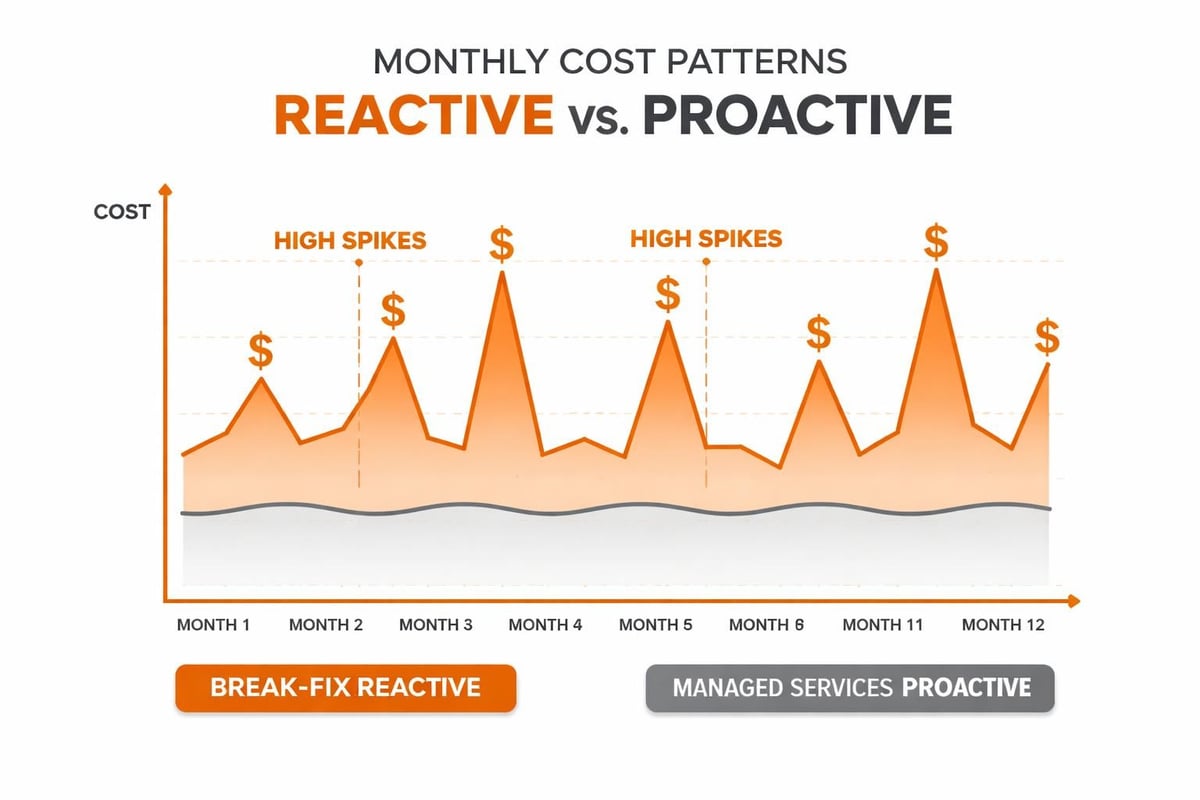
The managed services model aligns provider incentives with your success. Since they receive consistent monthly revenue, preventing problems becomes more profitable than billing hourly to fix emergencies their monitoring should have caught.
Security Considerations for Local IT Support
Cybersecurity threats evolve constantly, targeting businesses of all sizes with ransomware, phishing attacks, and data theft schemes. Your IT provider must implement comprehensive security protection that addresses multiple threat vectors simultaneously.
Multi-Layered Security Architecture
Effective security requires defensive layers working together rather than relying on single solutions:
- Perimeter protection through next-generation firewalls and intrusion prevention
- Endpoint security with advanced antivirus and behavior monitoring
- Email filtering to block phishing attempts and malicious attachments
- Access controls limiting user permissions to necessary resources only
- Security awareness training teaching employees to recognize threats
The Standard of Good Practice for Information Security provides frameworks that professional IT providers follow when designing security architectures.
Regular security assessments identify vulnerabilities before attackers exploit them. Penetration testing, vulnerability scans, and policy reviews should occur quarterly at minimum.
Scalability and Future Growth Support
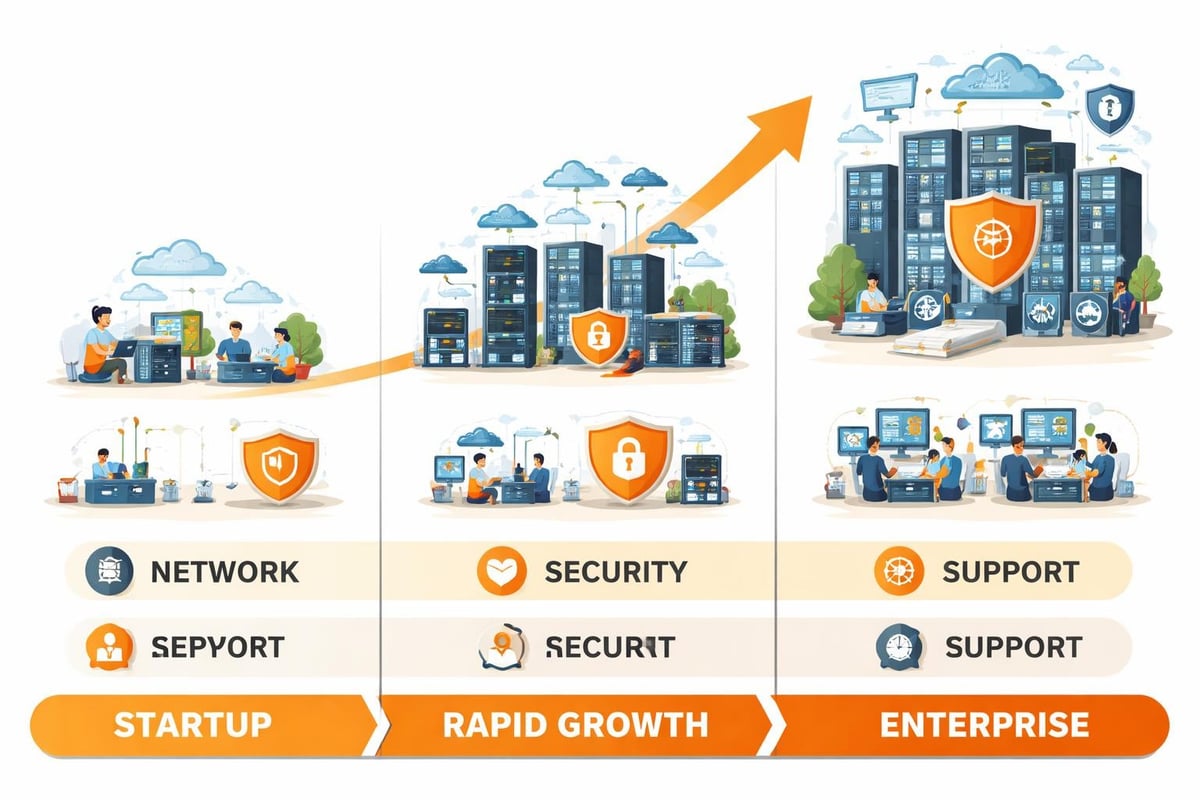
Today's IT solutions near me must accommodate tomorrow's business expansion. Technology infrastructure that works perfectly for 20 employees may collapse under the demands of 50 or 100 users.
Planning for Expansion
Strategic IT providers help you build scalable foundations that grow smoothly without requiring complete overhauls:
- Cloud-ready infrastructure that expands capacity on demand
- Modular systems allowing incremental additions
- Standardized configurations simplifying new equipment deployment
- Centralized management tools controlling distributed resources
- Capacity planning forecasting future requirements
Discussing three-year and five-year growth projections during initial consultations reveals whether providers think strategically or simply react to immediate requests.
Industry-Specific Requirements
Different industries face unique regulatory requirements, security standards, and operational challenges. IT providers with vertical expertise deliver solutions addressing these specific needs rather than generic approaches.
Healthcare organizations must comply with privacy regulations protecting patient information. Financial services face strict data retention and security audit requirements. Legal firms require ironclad confidentiality and document management systems.
| Industry | Primary IT Concerns | Specialized Requirements |
|---|---|---|
| Healthcare | Patient data privacy, system uptime | HIPAA compliance, EHR integration |
| Legal | Document security, client confidentiality | Matter management systems, secure communication |
| Finance | Transaction security, audit trails | SOX compliance, fraud detection |
| Manufacturing | Production system uptime, supply chain | Industrial control systems, inventory integration |
Understanding these best practices for IT solutions in specialized sectors demonstrates provider experience beyond basic network management.
Communication and Support Accessibility
Even the most technically skilled IT provider fails if they cannot communicate effectively or remain accessible when you need assistance. Evaluate communication quality during initial consultations and trial periods.
Support Channel Options
Modern IT support should offer multiple contact methods accommodating different situations and preferences:
- Phone support for urgent issues requiring immediate attention
- Email ticketing for non-critical requests with documentation
- Remote support solving many problems without site visits
- Client portals tracking ticket status and service history
- Mobile apps submitting requests from anywhere
Response quality matters as much as speed. Technicians should explain problems clearly, educate users, and document solutions for future reference.
Disaster Recovery and Business Continuity
Comprehensive IT solutions near me include robust disaster recovery planning that keeps businesses operational through equipment failures, natural disasters, or cyber attacks. Data backup systems form the foundation, but complete continuity planning addresses all critical business functions.
Recovery Time Objectives
Understanding recovery time objectives (RTO) and recovery point objectives (RPO) helps you design appropriate solutions:
RTO defines maximum acceptable downtime before business impact becomes severe. Can you survive two hours offline? Eight hours? Two days?
RPO establishes maximum acceptable data loss. Losing two hours of transactions might be tolerable, while losing two days could prove catastrophic.
These metrics determine backup frequency, redundancy requirements, and failover automation needs. Implementing effective IT management practices includes regular disaster recovery testing that validates your ability to actually restore operations using backup systems.
Cloud Integration and Hybrid Solutions
Pure on-premises infrastructure gives way to hybrid models combining local servers with cloud services. IT providers should guide this transition based on your specific workloads, security requirements, and budget constraints.
Certain applications benefit from cloud deployment through improved accessibility, automatic scaling, and reduced capital expenses. Other systems remain on-premises due to performance requirements, regulatory constraints, or total cost considerations.
Research on migrating enterprise systems to cloud infrastructure reveals both opportunities and risks that experienced providers help navigate successfully.
Technology Refresh and Lifecycle Management
Computer equipment, servers, and network devices require periodic replacement as they age beyond reliable service life. Professional IT providers implement lifecycle management tracking equipment age, performance, and failure risk.
Typical replacement cycles include:
- Desktop computers: 4-5 years
- Laptops: 3-4 years
- Servers: 5-7 years
- Network switches: 7-10 years
- Firewalls: 5-7 years
Budget planning for these replacements prevents emergency purchases when equipment fails unexpectedly. Many businesses spread costs through leasing programs or rolling upgrade schedules.
Making Your Final Selection
After evaluating multiple IT solutions near me, narrow choices based on technical capability, service quality, cultural fit, and value alignment. Request detailed proposals outlining specific services, response commitments, and all-inclusive pricing.
Trial periods reveal actual service quality beyond sales presentations. Starting with limited engagements like security assessments or network audits provides low-risk opportunities to evaluate performance before committing to comprehensive agreements.
Check references thoroughly, speaking with current clients about responsiveness, technical expertise, and problem-resolution effectiveness. Long-term client relationships indicate provider stability and customer satisfaction.
The right IT partner transforms technology from a cost center into a competitive advantage, enabling growth while protecting critical business assets. Geography matters, but expertise, reliability, and strategic thinking matter more. For additional guidance on selecting IT providers, contact qualified local technology consultants who understand regional market conditions and business requirements.
Finding quality IT solutions near me requires evaluating technical expertise, service responsiveness, and strategic capability beyond simple geographic proximity. The right provider combines rapid on-site support with proactive monitoring, robust security, and scalable infrastructure that grows with your business. Starcomm Technologies delivers comprehensive IT services throughout Toronto, offering managed IT, cybersecurity, and reliable support designed to keep your technology running smoothly while you focus on business growth.